
Design
October 15, 2026
Children’s Book Character Design: How to Keep Illustrations Consistent Across a Full Story

Sydney Bee
Author
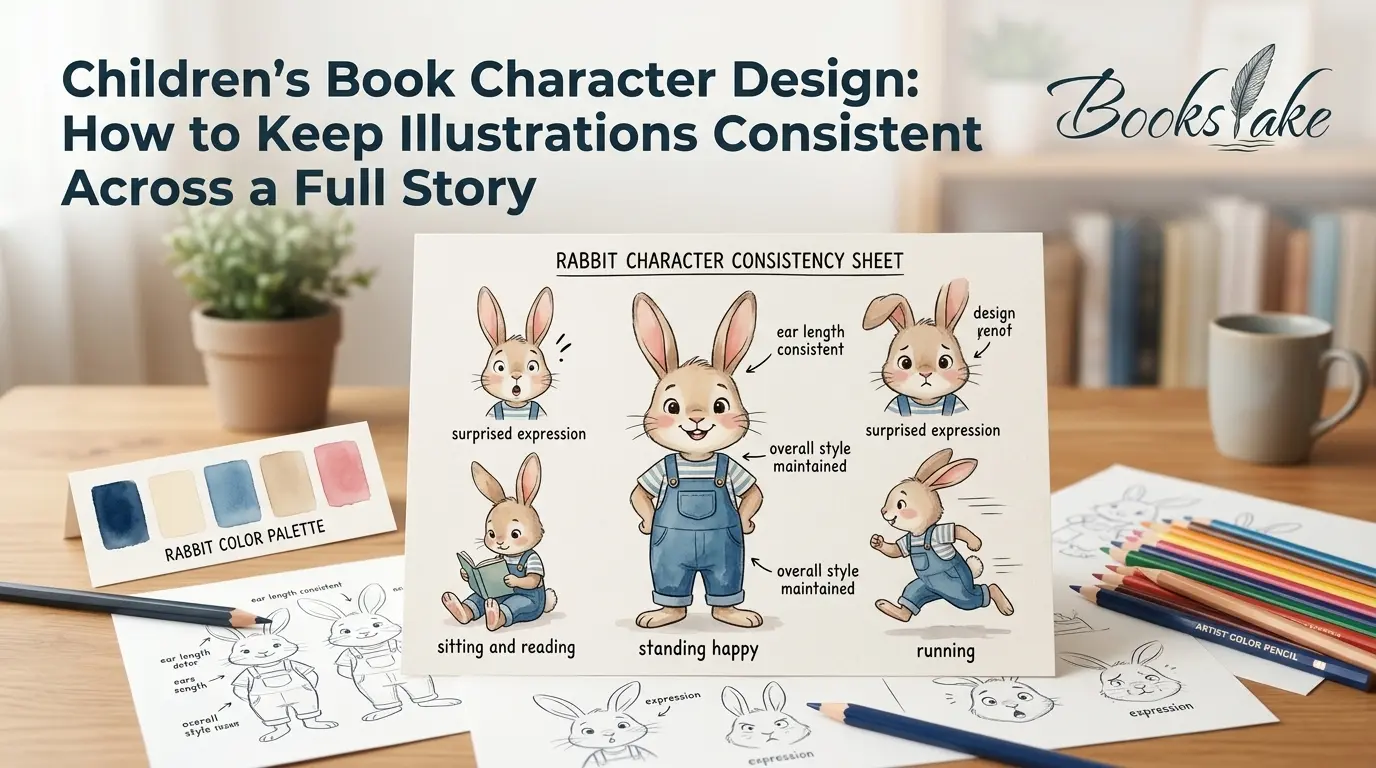
Children’s book characters need to look recognizable from the first page to the last. A character with curly hair, round glasses, and a yellow dress should retain those defining details throughout the story, even when the character runs, changes expressions, or appears in a different setting.Maintaining this consistency can be challenging, especially when a book contains dozens of illustrations. Character reference sheets, clear design rules, and regular reviews help authors and illustrators keep the artwork connected.1. Create a Character Reference SheetA character reference sheet records the details that define each main character. Illustrators use it as a visual guide throughout the project.Include front and side views, facial features, hairstyles, clothing, accessories, body proportions, and the character’s main colors. Adding a few expressions, such as happiness, sadness, and surprise, also helps establish how the character should look in different situations.For example, a rabbit might have long ears, a white patch around one eye, and blue overalls. These details should remain consistent whether the rabbit is jumping, sitting, or talking to another character.Approve the reference sheet before commissioning the complete set of illustrations. Making changes early can prevent repeated revisions later.2. Define Which Details Can ChangeNot every part of a character needs to remain identical. Expressions, poses, and movements should change naturally with the story, while defining features should stay recognizable.Character detailConsistency guidelineFacial featuresMaintain the established shapes and proportions Hair, fur, and markings Keep defining details consistent Clothing and accessories Follow the story's timelineFacial expressionsAdapt to the sceneBody positionChange with movement Colors and proportions Follow the approved designIf a child wears a red backpack at the beginning of a school-day story, the backpack should not suddenly become blue in the next scene. If the child takes it off, that change should make sense within the story.These simple rules help prevent visual errors without limiting the illustrator's creativity.3. Plan Each Scene Before Illustration BeginsCreate a scene-by-scene plan before illustrating the book. Record which characters appear on each page, what they are doing, where the scene takes place, and which objects or clothing details matter.This is particularly useful for stories with multiple characters, changing locations, or events that happen in a specific order.For example, if a character carries a toy into the garden, the illustration plan should indicate whether the toy remains there or appears in later scenes. Without this reference, small continuity errors can slip into the finished artwork.A simple spreadsheet or storyboard is often enough to track these details and keep the illustrations aligned with the manuscript.4. Maintain One Illustration StyleConsistent character design also depends on the overall artistic style. Even recognizable characters can look out of place if the illustrations change noticeably from page to page.Before production, agree on the color palette, line thickness, shading, textures, and level of detail. If the book uses soft watercolor artwork, the remaining pages should follow that approach unless a stylistic change is intentional.Ask the illustrator to complete a sample page or two-page spread first. Review the character, background, colors, and text placement before approving the visual direction for the full book.This gives both the author and illustrator a clear standard to follow.5. Use AI Illustration Tools CarefullyAI tools can help authors develop character concepts and test different visual styles. However, generating the same character across multiple scenes can produce inconsistent results.A character's facial features, clothing, colors, or proportions may change between images, even when similar prompts are used.To reduce these differences, keep an approved reference image, describe the character's defining features clearly, and compare each new illustration against the original. Review the images together rather than judging each one separately.Some illustrations may require manual editing to correct visual differences. Authors should also check the relevant tool's commercial-use terms before publishing AI-assisted artwork.6. Review Illustrations in Story OrderAn illustration may look correct on its own but reveal problems when placed beside the other pages. Reviewing the complete sequence helps identify inconsistencies before publication.Check for changes in hairstyles, clothing, body proportions, accessories, and recurring objects. Make sure character sizes remain believable, backgrounds match the story, and important details appear or disappear for a clear reason.Review the artwork before final page layout and again before approving the print-ready files. A second reviewer who has not worked on the project may also notice details that others have missed.7. Choose an Illustrator With Picture Book ExperienceA children's book illustrator must do more than create attractive individual images. The artwork needs to support the story, communicate emotions, and keep recurring characters recognizable throughout the book.When reviewing portfolios, look for complete books or sequences of illustrations rather than isolated images. Check how well characters maintain their appearance across different poses, expressions, and settings.Before starting the project, agree on the number of illustrations, revision limits, deadlines, and approval stages. Clear expectations help prevent misunderstandings and unnecessary rework.Authors who need help with character development and page-by-page artwork can explore Bookslake's children's book illustration services.Frequently Asked QuestionsHow do illustrators keep characters consistent in children's books?Illustrators use character reference sheets, approved color palettes, proportion guides, and sample illustrations to maintain the same defining features throughout the book.What should a character reference sheet include?It should include multiple character views, facial features, clothing, accessories, colors, body proportions, and examples of different expressions.Can AI generate consistent characters across a children's book?AI tools can assist with illustration, but details may vary between images. Reference images, clear prompts, and manual corrections can help improve consistency.When should authors check their book illustrations?Authors should approve character designs before full production, review illustrations as they are completed, and check the entire sequence before finalizing the layout.Why should authors approve a sample illustration first?A sample establishes the character's appearance and artistic style before the remaining illustrations are created, helping reduce avoidable revisions.
Ready to Publish Your Book?
Let Bookslake's expert team guide you through every step of your publishing journey. From editing to marketing, we're here to help you succeed.
Get Started TodayArticle Tags
#book publishing#book marketing#Book Illustration#Children’s Book
Sydney Bee
Author
I am an author and publishing professional with hands-on experience in ebook publishing, editing, and marketing. Through my work, I help writers transform ideas into professionally published books and reach the right audience with strategic publishing solutions.
Need Expert Help?
Get personalized guidance from our publishing experts. Schedule a free consultation today.
Contact Us