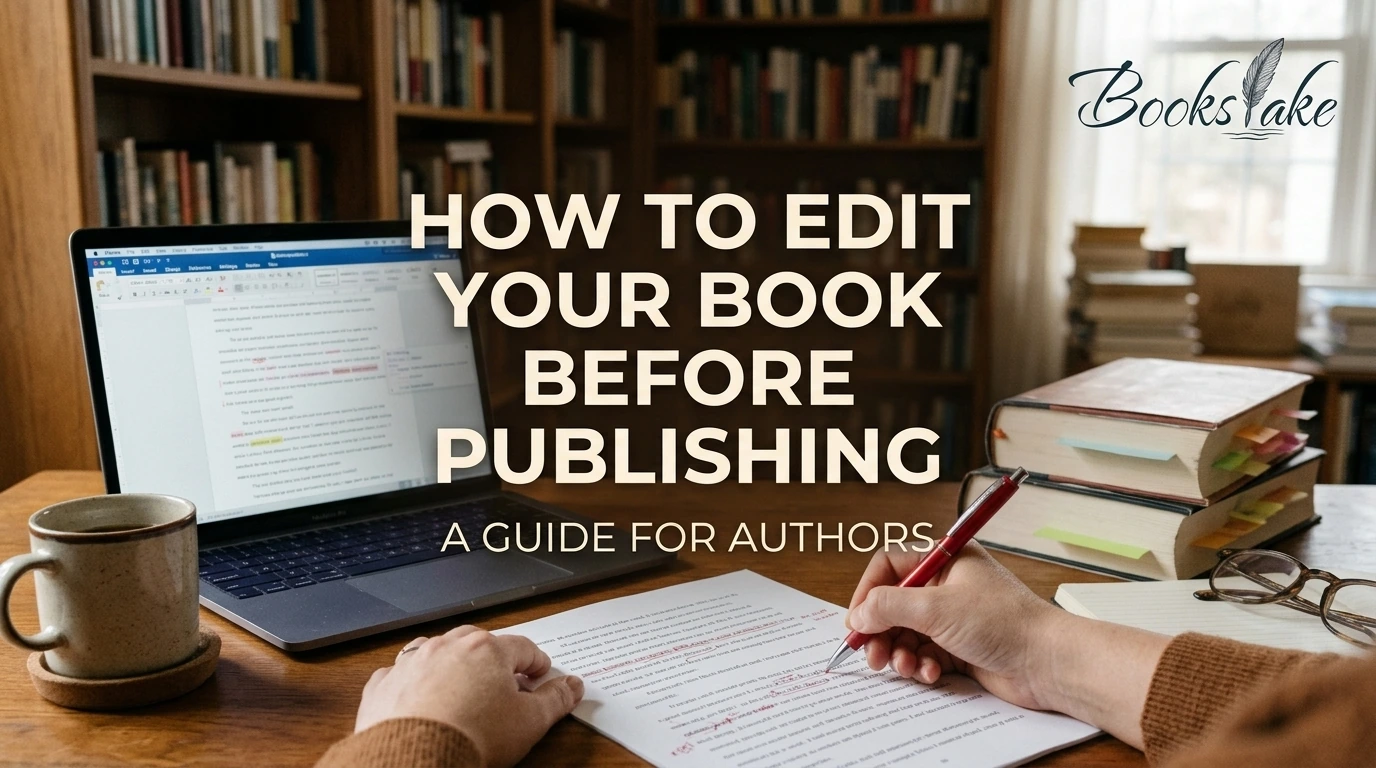
Finishing a book manuscript is a huge achievement but that first draft is rarely ready to be published as is. Chapters might need to be re-organized, sentences might not be clear and small grammar mistakes can affect the reading experience.
“Editing provides the author an opportunity to fix these problems before the book is seen by the reader.” This includes checking the structure of the book, smoothing out flow of sentences, correcting errors of language and making sure there is consistency throughout the manuscript. Whether you write fiction, nonfiction or memoir, the right editing process can make your book clearer and easier to read.
Why You Must Edit Your Book Before You Publish
A first draft gets your ideas down, but it doesn't always present them in the best possible light. You might repeat information, overlook holes in your explanations or add parts that don’t help the main topic.
For instance, a business author might talk about marketing strategies in multiple chapters, unaware that some of the explanations are repetitive. Editing helps you to spot repetition and structure the information better.
It also helps to enhance the clarity of sentences, as well as the consistency and ease of following the content. You don’t need to change all the things you have written but ensure that the message of each chapter is clear.
Understand the Various Stages of Editing a Book
What is Book Editing? There are various stages of book editing that look at different parts of a manuscript.
Developmental Edit
Developmental editing looks at the entire structure and content of the book. It points out weak chapters, missing information, plot gaps and problems with the flow of ideas.
For a novel this might be to improve characterisation or to reorder scenes. In nonfiction, this may mean reordering chapters so that information is presented in a more logical order.
Copy Editing
Line editing is sentence structure, word choice, and readability. It eliminates redundant words , enhances flow , and helps make paragraphs easier to understand without losing the author's voice .
Copyediting &
Copyediting is grammar, spelling, punctuation, and consistency. It also reviews names, dates, terminology and formatting to ensure that the details are correct throughout the manuscript.
How to Edit a Book Before Publishing: Step-by-Step Guide
An evident editing process that guides the authors through their manuscript without missing any important details.
Step 1: Look at Your Whole Manuscript
Read the whole manuscript before making major changes. Confusion in chapters, no full explanations and repetitive ideas. Taking a short break before reviewing the book will help you see problems that were easy to miss when writing.
Step 2: Analyse the Structure and Content of the Book
Review the order of your chapters and make sure each part serves the purpose of the book. Fiction must have a coherent plot and realistic development of characters; nonfiction must present its information in a logical order.
Step 3: Refine Sentences and Paragraphs
Look for long sentences, unclear language, unnecessary repetition. Use simpler wording to replace complicated wording without removing information that readers need to understand the subject.
Step 4: Correct grammatical and language issues
Check spelling. Check punctuation. Check verb tenses. Check sentence construction. Grammar-checking software can help you find possible errors, but check its suggestions before accepting changes.
Step 5: Check the Consistency of the Book
Make sure names, dates, terminology, headings, and formatting follow the same style. Even small inconsistencies can make a manuscript look unfinished.
Step 6: Read the Revised Manuscript
Read the revised manuscript from top to bottom. Check that the revisions have enhanced clarity and flow without changing the original meaning.
Common Book Editing Errors Authors Should Avoid
Some editing mistakes may in fact create more problems rather than improve the manuscript. Watch for the following:
Edit as you go. Constantly rewriting chapters that are not finished can slow down the process of writing.
Solely relying on software: Automated tools can miss contextual errors or suggest changes that change the intended meaning.
Ignoring structural problems: Good grammar won’t fix weak chapters, gaps in information, or a confusing plot.
Editing to alter the author's voice: Editing should enhance readability without sacrificing the writer's natural style.
Not having a second pair of eyes: A professional editor or a new reader may catch things the author missed.
Should You Edit Your Book or Hire a Professional Editor?
“Self-editing helps writers to look at their work again, to cut out unwanted material, and to correct elementary mistakes. However, knowing the manuscript may make it difficult to spot unclear sentences or missing information.
An independent review by a professional editor can suggest changes depending on the book’s content and audience.
Before you hire an editor, check their experience, what editing services they offer, sample work and revision process. Look for someone who understands the genre of your book and the kind of editing your manuscript needs.
How Much Editing Does Your Book Need Before You Publish
The amount of editing needed depends on the length, quality, subject matter and intended audience of the manuscript.
Writing fiction requires a focus on plot development, dialogue, character continuity and pacing. Nonfiction usually requires more clear explanations, facts, and well-organised chapters.
First time authors may require more assistance with structure and manuscript preparation. It’s best to look over the book first to see if it needs developmental editing, line editing, copyediting, or a combination of these services.
Getting Your Book Published
Review the final manuscript after editing before submitting it for publication. Check out chapter headings, citations, illustrations, page divisions, formatting.
Ebooks and printed books have different layout needs. Digital editions should display correctly across screen sizes, while print editions should have suitable margins, fonts, and page numbering.
Check a digital preview or printed proof for layout problems before you send the book out.
Hire a Professional to Edit Your Book Before Publishing
The manuscript may have good ideas but still need work before it can be published. Professional editing identifies writing issues, improves clarity and prepares the content for readers.
Book Editing If an author wants to polish their book, they can use our book editing services. If you are writing a novel, memoir or nonfiction book, editorial support can improve your content while keeping your original writing style.
Find out more about Bookslake’s services and discuss your manuscript requirements on their website.
Frequently Asked Question
How many revisions should you make to a book before publishing?
There is no set number. Most of the manuscripts require several reviews including structure, sentence quality, grammar, and final corrections.
What is the difference between editing and proofreading?
Editing polishes the structure, content, language and consistency of the manuscript. Proofreading is the last step in checking for spelling, punctuation, and typographical errors.
Do I need an editor before self-publishing?
You should hire an editor, as an independent review can catch mistakes and improve the manuscript before it is published.
How long does it take to edit a book?
The time frame depends on the length of the manuscript, the quality of writing, and the editing required. A full structural edit will take longer than a simple proofread.
Can I publish a book without getting it professionally edited?
Yes, but without an independent review you are more likely to miss mistakes, unclear passages and inconsistent information.