
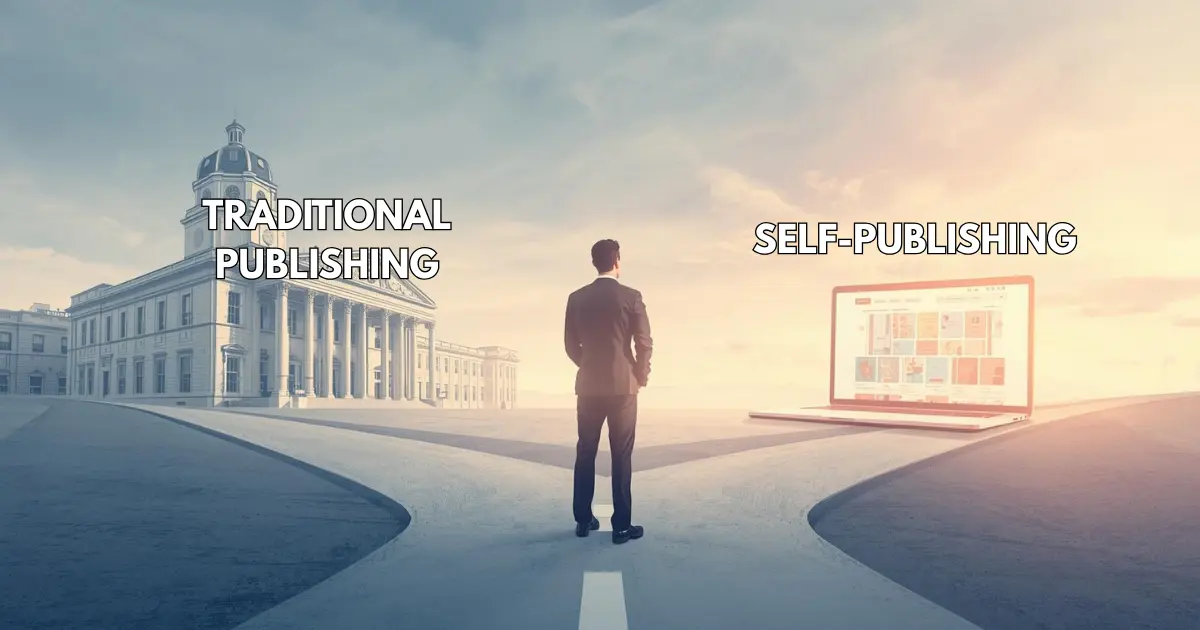
Every writer who finishes a manuscript eventually faces the same decision:
Should I pursue traditional publishing, or should I self-publish?
Both paths can lead to success, but they work very differently. The right choice depends on your goals, timeline, budget, and how much control you want over your book.
This guide breaks down self-publishing vs traditional publishing across cost, earnings, creative control, timelines, marketing, and long-term opportunities, so you can choose the publishing route that fits your career.
At a Glance: Self-Publishing vs Traditional Publishing
Factor: Traditional Publishing ~ Self-Publishing
Upfront: Cost None ~ Author-funded
Royalties: Low (5–15%) ~ High (35–70%)
Creative Control: Limited ~ Full control
Publishing Timeline: 2–4 years ~ 3–8 months
Marketing Responsibility: Shared ~ Author-led
Rights Ownership: Publisher-owned ~ Author-owned
Cost and Earnings
Traditional Publishing: No Upfront Cost, Lower Earnings
Traditional publishing does not require authors to pay for editing, design, or distribution. The publisher covers production costs and typically offers an advance.
However:
Advances vary widely and are not guaranteed
Royalties are relatively low
You must earn back the advance before receiving additional income
For many authors, traditional publishing offers financial safety, but limits long-term earning potential.
Self-Publishing: Higher Initial Investment, Greater Returns
Self-publishing requires upfront investment in:
Professional editing
Cover design
Formatting
Marketing strategy
Authors who work with a book editing and design company in USA or full professional book publishing services often see better results because quality directly impacts sales.
The advantage?
Self-published authors typically earn 35%–70% royalties, meaning fewer sales are needed to break even, and profits scale faster over time.

Creative Control
Traditional Publishing: Shared Decisions
Traditional publishers involve teams of editors, designers, and marketers. While their expertise is valuable, authors often have limited say in:
Cover design
Title changes
Pricing
Marketing direction
Contracts vary, but creative compromises are common.
Self-Publishing: Total Ownership
Self-publishing gives authors full control over:
Content
Branding
Cover and interior design
Pricing and promotions
Professionals work for you, not the other way around. This is why many authors choose Self-Publishing Services for Authors that combine expertise with author ownership.

Publishing Timelines
Traditional Publishing: Slow but Structured
From querying agents to bookstore release, traditional publishing often takes 2–4 years due to:
Agent submissions
Editorial schedules
Marketing calendars
Retail coordination
This timeline can be frustrating for authors who want momentum.
Self-Publishing: Fast and Flexible
Self-publishing moves at the author’s pace. With proper planning and professional support, authors can publish a book in the USA within 3–8 months.
Working with a Self-Publishing Company Philadelphia or nationwide provider can streamline editing, design, formatting, and launch preparation.

Marketing Responsibilities
Traditional Publishing: Partial Support
Traditional publishers may assist with:
Press outreach
Advance reader copies
Limited advertising
Distribution support
However, most authors are still expected to:
Build an online presence
Engage readers on social media
Maintain email lists
Support promotions
Marketing support varies widely between publishers.
Self-Publishing: Full Responsibility, Full Control
Self-published authors handle:
Advertising
Launch campaigns
Audience building
Long-term promotion
This is where book marketing services for authors and author marketing and publishing solutions become essential. Professional marketing turns self-publishing into a scalable business, not a guessing game.
Distribution Reach
Traditional Publishing: Strong Bookstore Access
Traditional publishers have established relationships with:
Bookstores
Libraries
Retail distributors
This can improve physical shelf presence, though placement is never guaranteed.
Self-Publishing: Flexible Distribution
Self-published authors control where their book appears:
Online retailers
Print-on-demand platforms
Direct sales
Bookstores (with the right strategy)
With Book Publishing Services USA, authors can achieve wide distribution while retaining rights and flexibility.

Rights and Long-Term Opportunities
Traditional Publishing: Shared or Surrendered Rights
Publishers often acquire:
Print rights
Ebook rights
Audio rights
Translation or subsidiary rights
While this can open doors, it also limits author control.
Self-Publishing: Rights Stay With You
Self-published authors retain full ownership and can:
License audio rights
Sell translations
Adapt books into other formats
Monetize long-term IP independently
This flexibility is a major reason authors choose professional self-publishing.
Which Publishing Path Is Right for You?
Choose traditional publishing if you:
Prefer industry validation
Don’t mind long timelines
Are comfortable with shared control
Want publisher-led distribution
Choose self-publishing if you:
Want speed and flexibility
Value creative control
Aim for higher royalties
Want to build a long-term author brand
Many modern authors start with self-publishing and later explore traditional deals—or combine both strategically.
Final Thoughts
There is no universal “best” publishing path, only the best one for your goals.
What matters most is professional execution. Whether you pursue traditional publishing or work with a Philadelphia book publishing agency offering professional book publishing services, quality editing, design, and marketing determines success.
Publishing is no longer about permission; it’s about strategy.
With the right approach, the right team, and a clear understanding of your priorities, either path can lead to a sustainable and successful writing career.