

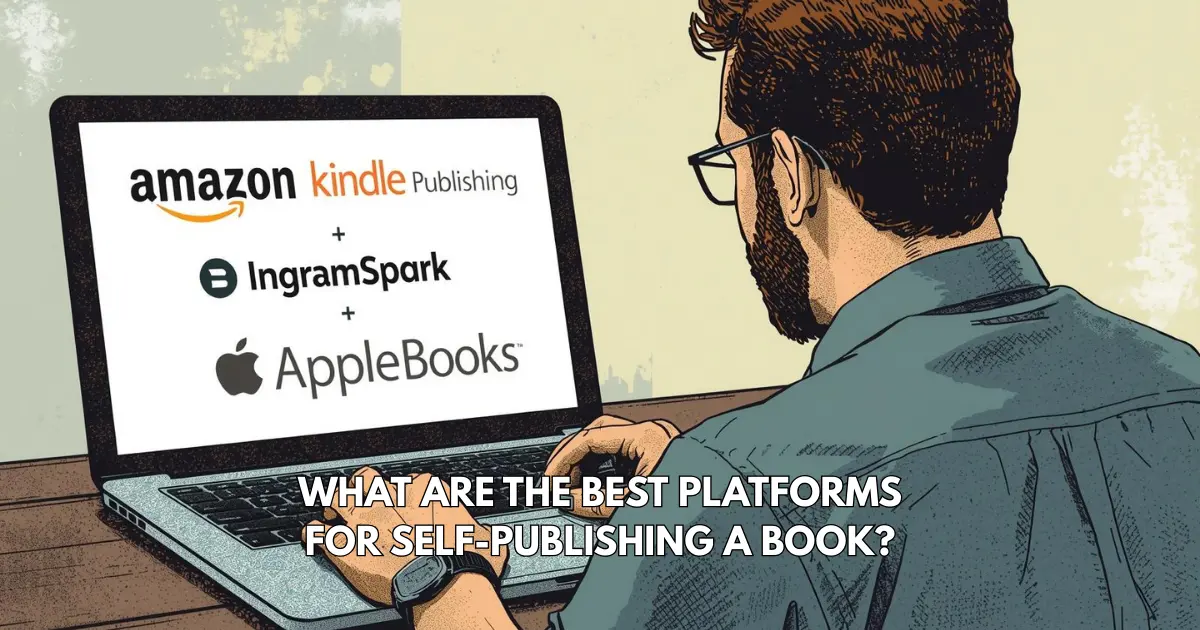
Self-publishing has transformed the publishing industry. Today, authors no longer need to wait years for traditional approval to see their books in readers’ hands. With the right platform and professional preparation, you can publish your book in the USA and reach a global audience within months.
However, not all self-publishing platforms are created equal. Each offers different royalty structures, distribution models, marketing tools, and levels of control.
In this guide, we break down the best platforms for self-publishing and explain how to choose the right one for your goals.
1. Amazon Kindle Direct Publishing (KDP)
Best for: Maximum visibility and global reach
Amazon KDP is the most widely used self-publishing platform in the world. It allows authors to publish both ebooks and paperback books, and offers access to Amazon’s massive customer base.
Key Advantages:
Global distribution through Amazon marketplaces
Up to 70% royalty on ebooks (depending on pricing)
Print-on-demand for paperbacks and hardcovers
Access to Kindle Unlimited (subscription-based readers)
Considerations:
High competition
Exclusivity is required for KDP Select enrollment
Limited brick-and-mortar bookstore reach
For most first-time authors, Amazon KDP is the foundation of self-publishing due to its reach and ease of use.

2. IngramSpark
Best for: Wide distribution and bookstore access
IngramSpark offers access to one of the largest book distribution networks in the world. Unlike Amazon, it focuses heavily on wholesale distribution to bookstores, libraries, and retailers.
Key Advantages:
Global print distribution
Hardcover options
Professional industry reputation
Better access to physical bookstores
Considerations:
Setup fees (though often discounted)
More technical formatting requirements
Wholesale discount expectations
Many professional book publishing services recommend combining Amazon KDP (for Amazon dominance) with IngramSpark (for expanded distribution).
3. Apple Books
Best for: iOS-focused readers
Apple Books allows direct ebook publishing for authors who want to reach readers using Apple devices.
Key Advantages:
No exclusivity requirement
Strong presence in certain markets
Attractive storefront presentation
Considerations:
Ebook-only (no direct print service)
Smaller market share compared to Amazon
Apple Books works best as part of a broader distribution strategy.

4. Kobo Writing Life
Best for: International markets (especially Canada and Europe)
Kobo offers strong international distribution and partnerships with retailers outside the United States.
Key Advantages:
Global ebook distribution
Promotional opportunities
No exclusivity requirement
Considerations:
Smaller U.S. presence compared to Amazon
Limited print distribution
Authors targeting international audiences often benefit from Kobo integration.
5. Barnes & Noble Press
Best for: U.S. retail presence
Barnes & Noble Press allows authors to publish ebooks and print books for distribution within the Barnes & Noble ecosystem.
Key Advantages:
Direct access to B&N’s online store
Print and ebook options
Competitive royalty rates
Considerations:
Limited international reach
Smaller digital audience compared to Amazon
It can complement Amazon and IngramSpark for broader U.S. exposure.

Should You Use Multiple Platforms?
In most cases, yes.
A multi-platform strategy increases visibility and reduces dependency on one retailer. However, some authors choose Amazon exclusivity (KDP Select) to access Kindle Unlimited and promotional tools.
The right decision depends on your goals:
Maximum Amazon exposure → KDP Select
Wide retail distribution → KDP + IngramSpark
Global ebook presence → Add Apple Books and Kobo
Choosing the Right Platform for Your Goals
Before selecting a platform, consider:
1. Your Audience
Where does your target audience buy books? Amazon? Bookstores? International retailers?
2. Your Format
Are you publishing:
Ebook only?
Paperback?
Hardcover?
Illustrated or specialty layout?
Some platforms handle complex formatting better than others.
3. Your Budget
While uploading can be free, professional publishing requires investment in:
Developmental editing
Copyediting
Proofreading
Cover design
Interior formatting
Marketing strategy
Working with a book editing and design company in USA or a provider offering Self-Publishing Services for Authors ensures your book competes at a professional level across all platforms.
Common Mistakes Authors Make
Choosing the wrong platform is rarely the real problem. The bigger issue is:
Publishing without professional editing
Using an amateur cover design
Ignoring metadata optimization
Skipping pre-launch marketing
Failing to build an audience before release
Successful self-publishing combines platform strategy with professional book publishing services and strong author marketing and publishing solutions.
Which Platform Is Truly “Best”?
There is no single best platform — only the best platform for your goals.
For most authors publishing in the USA:
Ideal Strategy:
Amazon KDP for dominance
IngramSpark for distribution
Professional marketing support for visibility
Partnering with a Self-Publishing Company Philadelphia or a nationwide provider offering Book Publishing Services USA can help streamline the technical, design, and marketing aspects while allowing you to focus on writing.

Final Thoughts
Self-publishing platforms give authors unprecedented control. But success doesn’t come from uploading alone; it comes from strategy.
Choosing the right platform, preparing your manuscript professionally, and implementing targeted marketing are what separate bestselling self-published authors from those who struggle to gain traction.
If your goal is to publish your book in the USA with confidence, focus on quality, distribution strategy, and audience targeting from the start.
The platform is just the vehicle. Professional execution is what drives results.