Blog
September 25, 2026
When Should You Add Illustrations to a Book? 7 Signs Your Story Needs Them

Sydney Bee
Author
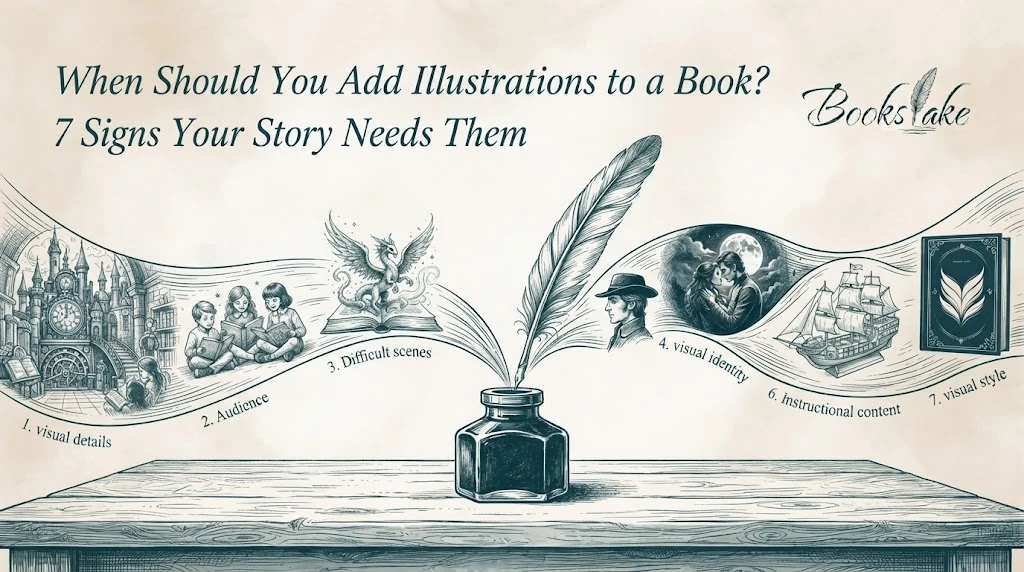
IntroductionNot every book needs illustrations. A novel or memoir can work perfectly well with text alone, while a children's story, educational guide, or visually driven book may benefit greatly from artwork.The decision should come down to purpose. An illustration should help readers understand, imagine, or feel something that may be harder to communicate through words alone.So, how do you know when your book actually needs illustrations? These seven signs can help you make that decision.1. Your Story Depends on Visual DetailsSome stories rely heavily on how characters, settings, objects, or scenes look. When those details are important, an illustration can give readers a clearer reference than a long description.This is particularly useful for children's books and fantasy stories. Imagine a story about a small character living inside a giant clock. You could spend several paragraphs describing its gears, rooms, ladders, and moving parts. An illustration could show the entire setting in seconds.In this situation, book illustrations support the writing rather than replacing it. The text moves the story forward, while the artwork helps readers understand the world.If readers need to picture the same complicated setting repeatedly, adding an illustration may make the story easier to follow.2. Your Target Readers Respond Well to VisualsYour audience should be one of the first things you consider.Children's books and early readers often depend on illustrations because younger readers use pictures to understand characters, actions, and settings. Images can also keep their attention while they develop stronger reading skills.Educational books can benefit in much the same way. A child learning about animals, planets, or the human body may understand the subject faster when written information is paired with a clear visual.Adults can benefit from illustrations too. Cookbooks, travel books, poetry collections, historical books, and certain nonfiction titles can use artwork to support the subject.The important point is to match the visuals to your audience. Adding illustrations simply because another book uses them may not make sense for your readers.3. A Scene Is Difficult to Explain With Words AloneSome ideas are simply easier to show than describe.Your story might contain a fictional city, unusual creature, complex machine, family tree, or map. Explaining every part through text can slow the reader down and make the information harder to remember.A visual can simplify it.For example, a map can show where characters are traveling without requiring repeated explanations about directions. A creature illustration can establish its physical appearance immediately. A diagram can show how a machine works without several paragraphs of description.If an illustration can communicate complicated information more clearly and quickly, it has a practical reason to be included.4. Your Characters Have a Strong Visual IdentityAppearance can be an important part of a character.A distinctive hairstyle, outfit, accessory, or physical feature can help readers recognize a recurring character, especially in children's books and illustrated series.Illustrations give readers a fixed visual reference. Once they know what a character looks like, they can recognize that character quickly each time they appear.Consistency is essential. A character should not suddenly have different hair, clothing, colors, or facial features without a reason.Before the illustrator starts, prepare basic character details, including age, clothing, hairstyle, colors, and other recognizable features. This can help keep the artwork consistent throughout the book.5. You Want to Strengthen an Emotional MomentSome moments become more powerful when readers can see them.A character sitting alone after losing something important, a child seeing snow for the first time, or two friends meeting after years apart can be supported by facial expressions, posture, lighting, and composition.The image does not need to explain the entire scene. Sometimes a simple visual can reinforce the emotion already created by the writing.That does not mean every emotional scene needs artwork. Using illustrations too frequently can make important moments feel ordinary.Instead, look for scenes where an image adds emotional weight or gives readers a memorable visual moment.6. Your Book Contains Educational or Instructional ContentIllustrations can make instructional content much easier to understand.Consider a children's activity book explaining how to make a paper craft. Written instructions can describe each step, but images can show exactly where to fold, cut, or place something.The same applies to science books, craft guides, cookbooks, technical material, and other educational content.There is a difference between decorative and functional artwork. A picture may make a page look attractive, but a labeled diagram can help readers understand the subject.When planning an educational illustration, ask what information the reader will gain from seeing it. If the answer is clear, the image is doing useful work.7. The Visual Style Is Part of Your Book's IdentityFor some books, the artwork is closely connected to the book's overall identity.A playful illustration style may suit a children's story, while detailed artwork may fit a fantasy book. A poetry collection might use simple drawings that complement its tone.Whatever style you choose, consistency matters.The cover, typography, colors, illustrations, and page layout should feel like parts of the same book. Artwork that looks unrelated to the cover or interior design can make the finished product feel disconnected.Before commissioning illustrations, decide what visual style fits the story and audience.When Illustrations May Not Be NecessaryAdding artwork does not automatically make a book better.Some novels work better when readers create their own mental images. A business book may need charts and diagrams rather than decorative drawings. A memoir may be better suited to photographs.You should also consider budget, page count, publishing format, and production time. Full-page artwork can affect printing and design costs, while digital books may require different formatting.The goal is not to put an image on every page. It is to use visuals where they add genuine value.How to Choose the Right Type of IllustrationDifferent books require different types of artwork.Full-page illustrations can highlight major scenes or important moments.Spot illustrations add smaller visual elements without taking over the page.Character illustrations establish the appearance of recurring characters.Scene illustrations show specific events from the story.Diagrams and educational visuals explain processes, structures, or concepts.Maps and supporting artwork can clarify locations, timelines, and relationships.Start with the purpose of each image. If you cannot explain what an illustration adds to the book, it may not need to be there.What to Consider Before Hiring a Book IllustratorBefore hiring an illustrator, define the visual direction of your book. Consider your audience, genre, tone, colors, and preferred style.Prepare character and scene details, decide approximately how many illustrations you need, and set a realistic budget and timeline.If you are preparing your manuscript for publication, Bookslake can also be considered when planning the publishing and production side of your book.Final ThoughtsIllustrations should serve the story, not simply fill empty space.Your book may benefit from artwork if it relies on visual details, targets readers who respond well to images, contains difficult-to-explain concepts, features visually distinctive characters, includes educational material, or has a strong visual identity.The best approach is to review your manuscript and identify the moments where an image would make something clearer, more memorable, or more emotionally effective.When every illustration has a reason to be there, the artwork becomes part of the storytelling rather than an extra decoration.
Ready to Publish Your Book?
Let Bookslake's expert team guide you through every step of your publishing journey. From editing to marketing, we're here to help you succeed.
Get Started TodayArticle Tags
#Book illustrations#Book#Children's books
Sydney Bee
Author
I am an author and publishing professional with hands-on experience in ebook publishing, editing, and marketing. Through my work, I help writers transform ideas into professionally published books and reach the right audience with strategic publishing solutions.
Need Expert Help?
Get personalized guidance from our publishing experts. Schedule a free consultation today.
Contact Us